
By The Philippine Business and News
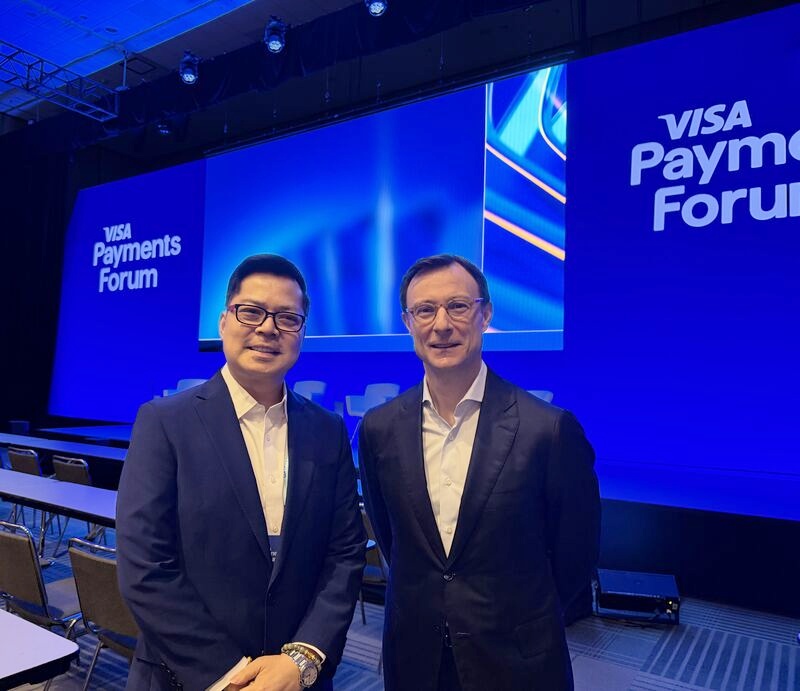
SAN FRANCISCO, California — The future of financial services will not be defined solely by faster payments or more advanced technology. It will be shaped by trust, interoperability, and the ability to translate innovation into meaningful financial inclusion.
This was among the key insights shared by RCBC Executive Vice President and Chief Innovation and Inclusion Officer and FinTech Alliance.PH Founding Chairman Lito Villanueva following his participation in the Visa Payments Forum 2026, held from June 9 to 11 at the Moscone Center in San Francisco.
Bringing together global financial institutions, technology firms, developers, merchants, and digital commerce leaders, the annual forum examined how artificial intelligence, cybersecurity, digital identity, cross-border payments, and emerging technologies are redefining the future of finance.
For Villanueva, however, the discussions pointed to a broader transformation taking place across the global financial ecosystem.
“What struck me was how the conversation was not just about payments. It was about the future of commerce, trust, technology, and global connectivity,” he said.
The conversations reflected a growing consensus among global industry leaders that the next wave of fintech innovation will depend less on introducing new technologies and more on creating secure, seamless, and interconnected financial ecosystems that consumers and businesses can trust.
Among the major themes discussed were the accelerating adoption of generative artificial intelligence, stronger fraud prevention and cybersecurity frameworks, the modernization of cross-border payment infrastructure, personalized customer experiences, and greater global interoperability across financial networks.
According to Villanueva, these developments are no longer distant trends but are increasingly shaping the Philippine and ASEAN financial landscape.
“These priorities strongly resonate with what we are seeing across the Philippines and ASEAN. AI is rapidly transforming customer experiences. Stablecoins are moving from concept to reality. Cross-border payments continue to become faster and more interconnected. At the same time, trust, security, and financial inclusion remain at the heart of sustainable innovation,” he said.
His observations come as the Philippine financial sector enters what many consider its next phase of digital transformation. After successfully bringing more than half of the country’s adult population into the formal financial system, the challenge has shifted from expanding access to ensuring that digital financial services remain secure, inclusive, and relevant.
Villanueva emphasized that sustaining this momentum will require greater investments in digital trust, cybersecurity, interoperable payment infrastructure, and customer-centric innovation.
“The challenge before us is no longer simply adoption. It is ensuring that innovation translates into meaningful impact, greater trust, and broader access to financial services for every Filipino,” he said.
He added that emerging technologies—including artificial intelligence, digital identity solutions, stablecoins, and cross-border financial infrastructure—are expected to dominate discussions among policymakers, regulators, financial institutions, and fintech leaders in the region, including at the upcoming ASEAN Fintech Summit.
As financial services become increasingly borderless and technology-driven, Villanueva said collaboration between banks, fintech companies, regulators, and global payment networks will be essential in building a resilient and inclusive digital economy.
The Visa Payments Forum underscored a clear message for financial institutions worldwide: the future of finance will belong not only to those that innovate fastest, but to those that innovate with trust, security, and inclusion at the core.
See full post here.