
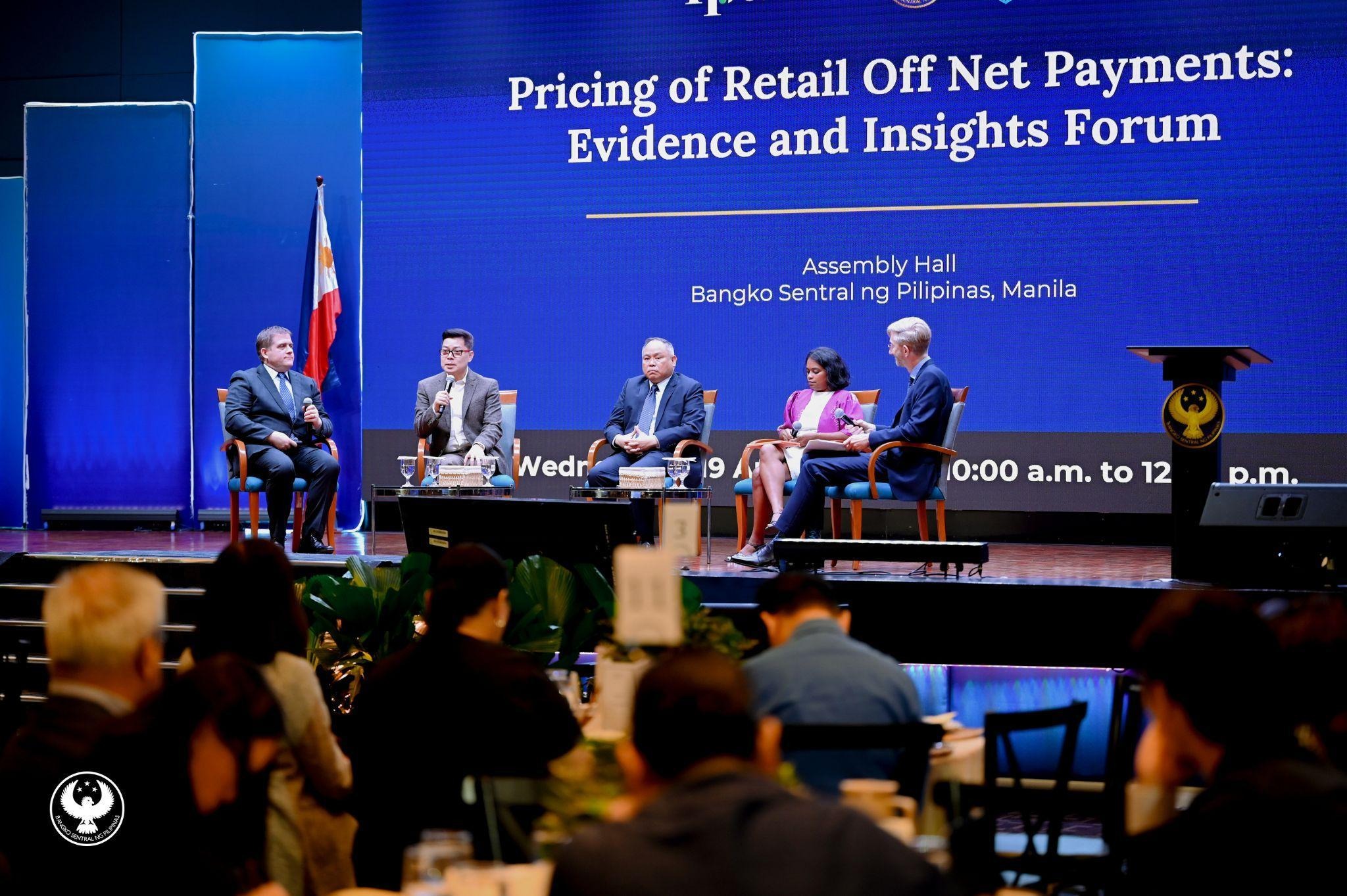
Study shows transaction activity increased significantly when fees were reduced, highlighting affordability as a key factor in digital payment adoption and inclusion.

RCBC Executive Vice President and Chief Innovation and Inclusion Officer Lito Villanueva during the Pricing of Retail Off-Net Payments: Evidence and Insights Forum at the Bangko Sentral ng Pilipinas.
MANILA, Philippines — Lower fees can significantly increase the use of digital payments, according to findings from a study conducted by Innovations for Poverty Action (IPA) Philippines in partnership with the Bangko Sentral ng Pilipinas and the Rizal Commercial Banking Corporation (RCBC).
The study, presented during the Pricing of Retail Off-Net Payments: Evidence and Insights Forum at the BSP headquarters, examined how the price of off-net InstaPay transactions affects consumer demand and usage. Approximately 15,000 RCBC customers using the Pulz and DiskarTech mobile banking platforms were randomly assigned different InstaPay fee levels, including zero and low fees. Actual transaction data was then analyzed alongside participant surveys.
The results showed a clear relationship between lower fees and increased transaction activity. DiskarTech users doubled their transactions when fees were reduced to zero, while Pulz users increased their transactions by about 30%.
Lower fees encouraged new users to transact, particularly among DiskarTech clients, while Pulz activation effects were smaller.
The release of these insights is particularly timely, coming shortly after the issuance of BSP Circular No. 1238, which provides guidance on the pricing of retail payment services. It gives banks the evidence and insights that can help inform the continuing conversation on how pricing can support, rather than hinder, the broader adoption of digital payments.
The findings underscore that the impact of payment pricing extends beyond the fee itself. This is best embodied by its three key salient findings. First, access and affordability are not the same thing: making digital payments available does not necessarily make them accessible to everyone. Second, the behavioral impact of fees is critical for financial institutions, whether they encourage digital adoption or drive users back to cash. And third, good policy requires good measurement as financial institutions need strong evidence to create better payment systems that are relevant to the needs and contexts of present day consumers.
Price sensitivity was broadly distributed across demographic groups, although there is some evidence of greater responsiveness among younger Pulz users. The clearest heterogeneity was by prior InstaPay use, particularly among DiskarTech users.
“Digital payments will not win on price alone. They win when they are trusted, secure, reliable, and fast. Make digital payments so seamless that cash becomes the exception, not the default,” said Lito Villanueva, Executive Vice President and Chief Innovation and Inclusion Officer of RCBC.
“The study shows that when we reduce friction, people transact more. That makes pricing not just a revenue decision, but also an inclusion decision,” Villanueva added.
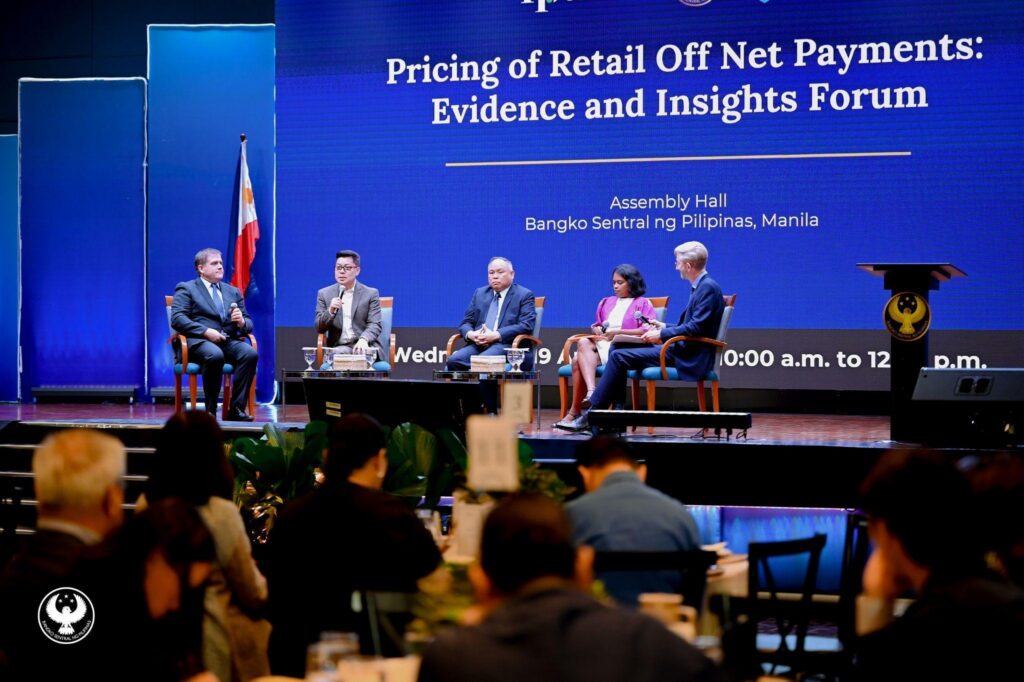
Panelists discuss the study’s implications for digital payment pricing, financial inclusion, and future policy and research priorities in the Philippines.
The outcomes of the research align with the learnings found by the Bangko Sentral ng Pilipinas (BSP) in their BSP Consumer Expectation Survey, which highlighted Filipinos’ demand for free bank transfers.
“In the BSP Consumer Expectation Survey, one in three Filipinos consider high fees as a barrier to more frequent use of digital payments. Hence, pricing affects not only adoption but also sustained engagement,” BSP Deputy Governor Mamerto E. Tangonan said in his welcome remarks.
The study also underscored the impact of zero transfer fees to non-active banking users, activating them and triggering engagement especially amongst the low-income segment of the studied population.
“So, [for] people who weren’t using InstaPay in the months before our study, does offering lower fees activate non-users? Yes, we also see that effect. The effect isn’t massive, but measurable and noticeable,” IPA Principal Investigator and Associate Professor of Economics at the University of Sydney Russell Toth expounded in his presentation of the findings.
The research partnership between RCBC and IPA was established to examine the elasticity of demand and welfare implications of instant retail payments, as well as how off-net payment usage can be measured. The study used RCBC’s Pulz and DiskarTech platforms to implement different InstaPay price levels and analyze resulting changes in customer behavior.
IPA’s research team was led by Dr. Russell Toth of the University of Sydney, in collaboration with Joaquin Gonzales of Ateneo de Manila University, Dr. Philip Roessler of William & Mary, and Dr. Tiffany Tsai of the National University of Singapore. The full report will be available online, allowing multiple banking stakeholders including consumers and academics to have academic evidence around transfer fees and its impact on digital banking adoption and financial inclusion.
The study is among the first randomized evaluations to empirically examine the price elasticity of demand for digital payments, providing evidence that can inform discussions on payment pricing, consumer welfare, system efficiency, and provider sustainability.
Villanueva said the findings also point to the need for a broader approach to digital financial inclusion.
“Lower prices alone will not fully activate harder-to-reach users. Trust, usability, merchant acceptance, consumer protection, and the accessibility of digital payment infrastructure to more financial institutions also matter,” he said.
The forum brought together representatives from government, financial service providers, industry associations, development partners and other stakeholders to discuss the study findings and their implications for the future of instant payments in the Philippines. The event also provided a platform to gather industry perspectives for future research and policy discussions around instant payments and digital public infrastructure.
###
About RCBC
RCBC (Rizal Commercial Banking Corporation) is one of the top banks in the Philippines. Currently ranked as the fifth largest privately owned bank in the country, RCBC offers a full range of financial products and services to individuals and businesses nationwide for 65 years and counting.
Recognized as the Best Bank for Digital and Best Bank for Customer Experience, RCBC continues to drive innovation through customer-focused, technology-driven solutions. The bank is a proud member of the Yuchengco Group of Companies (YGC), one of Southeast Asia’s most established conglomerates. To learn more, visit www.rcbc.com.
About IPA
Innovations for Poverty Action (IPA) is a research and policy nonprofit dedicated to discovering and scaling evidence-based solutions to global poverty. Founded in 2002, IPA designs and evaluates programs with researchers, governments, and civil society organizations across 16 countries in Africa, Asia, and Latin America, translating findings into policy and practice.
IPA’s Financial Inclusion Program works with financial service providers, policymakers, and investors to design and test financial products, foster enabling environments for innovation, and protect consumers against risk. To learn more, visit www.poverty-action.org.